

Hey there! As a supplier of windproof pergolas, I often get asked about how to test the windproof performance of these structures. It's a crucial aspect, especially for customers who live in areas prone to strong winds. In this blog, I'll share some practical ways to test the windproof capabilities of a pergola, based on my experience in the industry.
Understanding the Basics of Windproof Pergolas
Before we dive into the testing methods, let's quickly go over what makes a pergola windproof. A windproof pergola is designed to withstand the force of the wind without getting damaged or collapsing. This usually involves using sturdy materials, such as high - quality aluminum or strong wood, and having a well - engineered structure.
There are different types of pergolas we offer, like the Economic Flipping Pergola, which is not only cost - effective but also designed to handle windy conditions. The Aluminum Pergola with Adjustable Louvers is another great option. The adjustable louvers can be adjusted to reduce wind resistance, making it more windproof. And for those who want to install a pergola on their deck, the Pergola On Deck is a fantastic choice that is built to be stable in windy environments.
Field Testing
One of the most straightforward ways to test a pergola's windproof performance is through field testing. This involves installing the pergola in an open area where it can be exposed to natural winds.
First, you need to choose a suitable location. An open field or a large backyard away from any wind - blocking structures is ideal. Make sure the pergola is installed according to the manufacturer's instructions. This includes proper anchoring to the ground or deck. A poorly installed pergola may fail the test even if it's designed to be windproof.
Once the pergola is set up, you can start observing it during windy days. Look for any signs of movement, such as swaying or wobbling. A small amount of movement is normal, but excessive movement could indicate a problem. You can also check for any loose parts, like screws or bolts that may have come loose due to the wind.
It's a good idea to use a wind speed meter to measure the wind speed during the test. This will give you an accurate idea of how the pergola performs at different wind speeds. You can record your observations, including the wind speed, the time of day, and any visible effects on the pergola.
Laboratory Testing
For a more accurate and controlled assessment, laboratory testing is a great option. In a laboratory setting, you can simulate different wind conditions and measure the pergola's response precisely.
The laboratory will typically use a wind tunnel to create artificial winds. The pergola is placed inside the wind tunnel, and the wind speed and direction can be adjusted as needed. Sensors are attached to the pergola to measure the forces acting on it, such as the pressure and stress on different parts of the structure.
During the test, the laboratory technicians will gradually increase the wind speed to see how the pergola holds up. They will look for any signs of deformation, such as bending or cracking. The data collected from the sensors will be analyzed to determine the maximum wind speed the pergola can withstand.
Laboratory testing is more expensive and time - consuming than field testing, but it provides more reliable results. It's especially useful for new pergola designs or when you need to meet specific industry standards.
Computer Simulation
Another modern method of testing the windproof performance of a pergola is through computer simulation. This involves using specialized software to model the pergola and simulate different wind scenarios.
The software takes into account factors such as the shape, size, and material of the pergola, as well as the wind speed and direction. It can calculate the forces acting on the pergola and predict how it will respond under different conditions.
Computer simulation has several advantages. It's faster and cheaper than laboratory testing, and it allows you to test multiple design variations without having to build physical prototypes. You can also simulate extreme wind conditions that may be difficult to replicate in the field or laboratory.
However, computer simulation is only as accurate as the data input into the software. So, it's important to use reliable data for the material properties and wind conditions.
Factors Affecting Windproof Performance
There are several factors that can affect the windproof performance of a pergola. Understanding these factors can help you design and test a more wind - resistant pergola.
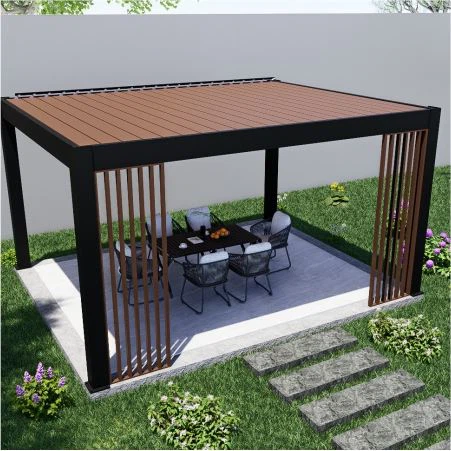
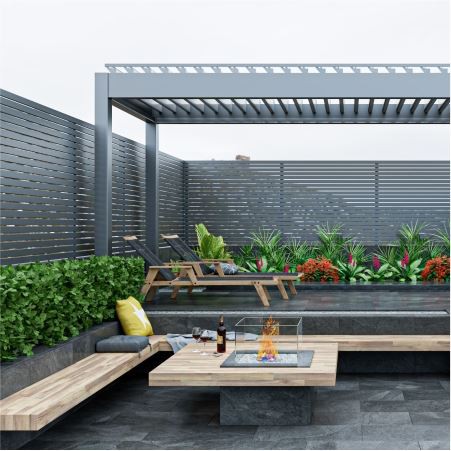
Material Quality: The quality of the materials used in the pergola is crucial. High - strength aluminum or treated wood is more likely to withstand strong winds than lower - quality materials. The thickness of the material also matters. Thicker beams and columns can provide more stability.
Design: The design of the pergola plays a significant role in its windproof performance. A pergola with a streamlined shape will have less wind resistance than one with a more complex design. The spacing between the beams and the size of the openings also affect how the wind interacts with the pergola.
Anchoring: Proper anchoring is essential for a windproof pergola. Whether it's anchored to the ground or a deck, the anchors need to be strong enough to hold the pergola in place. The type of anchor used will depend on the surface and the weight of the pergola.
Conclusion
Testing the windproof performance of a pergola is an important step to ensure its safety and durability. Whether you choose field testing, laboratory testing, or computer simulation, each method has its own advantages and can provide valuable insights.
As a windproof pergola supplier, we are committed to providing high - quality products that can withstand strong winds. Our Economic Flipping Pergola, Aluminum Pergola with Adjustable Louvers, and Pergola On Deck are all designed and tested to meet strict windproof standards.
If you're interested in purchasing a windproof pergola or have any questions about our products, feel free to reach out to us for a detailed discussion. We're here to help you find the perfect pergola for your needs.
References
- Building Codes and Standards for Outdoor Structures
- Research Papers on Wind Engineering and Structural Design