

As a seasoned supplier of Aluminum Alloy Pergolas, I've witnessed firsthand how the design of these structures can significantly impact their stability. In this blog, I'll delve into the various design elements that play a crucial role in ensuring the stability of an aluminum alloy pergola, drawing on industry knowledge and real - world experience.
Material Selection and Composition
The foundation of a stable pergola begins with the choice of aluminum alloy. Different alloys have distinct properties that affect the overall strength and durability of the pergola. For instance, 6061 - T6 aluminum alloy is a popular choice in the pergola industry. It offers a good balance of strength, corrosion resistance, and weldability. This alloy has a yield strength of around 276 MPa, which means it can withstand significant stress before it starts to deform.
The composition of the alloy also matters. The addition of elements like magnesium and silicon in 6061 alloy enhances its mechanical properties. Magnesium contributes to the alloy's strength, while silicon improves its fluidity during the extrusion process, resulting in a more uniform and consistent pergola structure. When designing a pergola, we at [Company] carefully select the alloy based on the intended use and the environmental conditions it will be exposed to. For pergolas in coastal areas, where saltwater corrosion is a concern, we might opt for an alloy with higher corrosion - resistant properties, such as 5052 aluminum alloy.
Structural Design
The structural design of an aluminum alloy pergola is perhaps the most critical factor in determining its stability. There are several key aspects to consider:
Frame Design
The frame is the backbone of the pergola. A well - designed frame distributes the load evenly across the structure, preventing stress concentrations that could lead to failure. A common frame design is the rectangular frame with vertical posts and horizontal beams. The size and spacing of the posts and beams are crucial. For example, if the posts are too far apart, the beams may sag under the weight of the roof or in high - wind conditions.
We typically recommend a post spacing of no more than 8 feet for standard residential pergolas. This spacing ensures that the beams can support the load without excessive deflection. Additionally, the thickness of the frame members is important. Thicker members generally offer greater strength, but they also add to the cost and weight of the pergola. We use computer - aided design (CAD) software to optimize the frame design, taking into account factors such as the expected load, wind and snow loads, and the overall aesthetic of the pergola.
Roof Design
The roof design of an aluminum alloy pergola also affects its stability. There are different types of roofs, including solid roofs, lattice roofs, and retractable roofs. Solid roofs provide more protection from the elements but also add more weight to the structure. This means that the frame needs to be stronger to support the additional load.
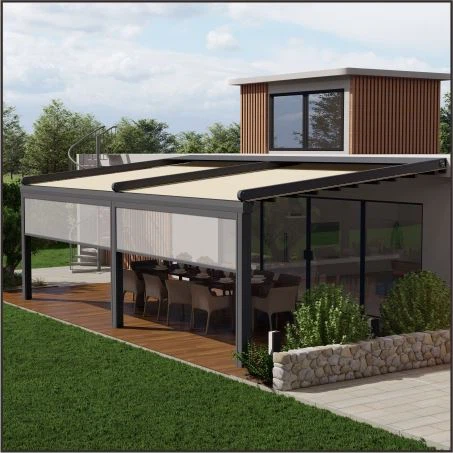
Lattice roofs, on the other hand, are lighter and allow more air to pass through, reducing wind resistance. However, they may not provide as much protection from rain or direct sunlight. Retractable roofs offer the best of both worlds, allowing users to adjust the amount of shade and protection as needed. Our Motorized Pergola System for Restaurant is a prime example of a retractable roof system that combines functionality with stability. The motorized mechanism is designed to operate smoothly and securely, ensuring that the roof can be opened and closed without compromising the stability of the pergola.
Connection Design
The connections between the frame members are another critical aspect of the structural design. Strong and reliable connections are essential for transferring loads between the members and maintaining the integrity of the structure. We use a variety of connection methods, including welding, bolting, and riveting.
Welding provides a permanent and strong connection, but it requires skilled labor and proper equipment. Bolting and riveting are more flexible and allow for easier assembly and disassembly. We often use a combination of these methods to ensure the best possible connection. For example, we might weld the main frame members together for added strength and then use bolts or rivets to attach the secondary members, such as the rafters or purlins.
Aesthetic Design and Stability
While aesthetic design is often associated with the visual appeal of a pergola, it can also have an impact on its stability. For example, a pergola with a complex or asymmetrical design may be more difficult to stabilize than a simple, symmetrical design.
Shape and Form
A pergola with a simple rectangular or square shape is generally more stable than one with a curved or irregular shape. This is because the load distribution in a simple shape is more predictable, and it is easier to design a frame that can support the load evenly. However, we understand that some customers may prefer a more unique and aesthetically pleasing design. In such cases, we work closely with our customers to ensure that the design does not compromise the stability of the pergola. We may use additional support structures or modify the frame design to accommodate the unique shape.
Decorative Elements
Decorative elements, such as finials, brackets, and lattice patterns, can add to the visual appeal of the pergola. However, they also add weight and may affect the wind resistance of the structure. When incorporating decorative elements into the design, we take into account their impact on the stability. For example, large finials on top of the posts may act as sails in high - wind conditions, increasing the wind load on the pergola. We may choose to use lighter - weight materials for the decorative elements or design them in a way that minimizes their wind resistance.

Environmental Factors and Design Adaptation
The environmental conditions in which the aluminum alloy pergola will be installed also play a significant role in its design and stability.
Wind Load
Wind is one of the most significant environmental factors that can affect the stability of a pergola. High - wind conditions can exert a large force on the structure, causing it to sway or even collapse. To design a pergola that can withstand high winds, we consider the wind speed and direction in the area where it will be installed.
We use wind load calculations based on local building codes and standards. These calculations take into account factors such as the height of the pergola, its shape, and the surrounding terrain. For pergolas in areas with high wind speeds, we may increase the size and thickness of the frame members, add diagonal bracing to the frame, or design the roof to be more aerodynamic.
Snow Load
In areas with heavy snowfall, the weight of the snow on the pergola roof can be a significant concern. Snow load calculations are similar to wind load calculations, but they take into account the density and depth of the snow. We design the pergola to withstand the maximum expected snow load in the area. This may involve increasing the strength of the beams and rafters or designing the roof with a steeper pitch to allow the snow to slide off more easily.
Temperature and Humidity
Temperature and humidity can also affect the stability of an aluminum alloy pergola. Aluminum expands and contracts with changes in temperature, and high humidity can lead to corrosion. We design the pergola to accommodate these changes. For example, we leave expansion joints in the frame to allow for thermal expansion and contraction. We also apply protective coatings to the aluminum to prevent corrosion, especially in areas with high humidity or near bodies of water.
Conclusion
In conclusion, the design of an aluminum alloy pergola has a profound impact on its stability. From material selection and structural design to aesthetic considerations and environmental adaptation, every aspect of the design must be carefully considered to ensure a stable and long - lasting pergola.
As a leading supplier of Aluminum Alloy Pergola and Aluminium Pergola Systems, we are committed to providing our customers with high - quality, stable, and aesthetically pleasing pergolas. If you are interested in purchasing an aluminum alloy pergola or have any questions about our products, we encourage you to contact us for a consultation. Our team of experts will work with you to design a pergola that meets your specific needs and requirements.
References
- Aluminum Association. (2023). Aluminum Design Manual.
- Building Codes and Standards for Structural Design, Local Authorities.
- Engineering textbooks on materials science and structural engineering.