

As a trusted pergola supplier, I've witnessed firsthand the growing demand for energy - efficient outdoor structures. A pergola is not just a beautiful addition to your outdoor space; it can also be an energy - saving asset when designed and equipped properly. In this blog, I'll share some practical tips on how to make a pergola more energy - efficient.
Select the Right Location
The first step in creating an energy - efficient pergola is choosing the right location. Place your pergola in an area that receives the appropriate amount of sunlight based on your climate. In hot climates, positioning the pergola on the north - facing side of your house can help block direct sunlight during the hottest parts of the day. This reduces the heat transfer into your home, thus lowering your air - conditioning costs.
Conversely, in colder climates, a south - facing pergola can capture sunlight during the winter months, providing natural warmth. You can also use the pergola to shade your windows in the summer and allow sunlight in during the winter, acting as a passive solar design element.
Opt for Energy - Saving Materials
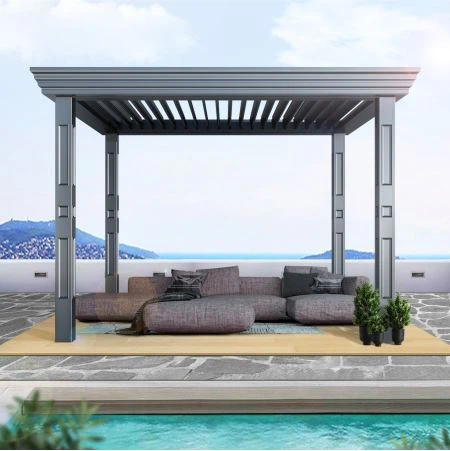
The materials you choose for your pergola play a crucial role in its energy efficiency. Aluminum pergolas, such as our Louved Roofs Aluminum Pergola, are a great option. Aluminum is lightweight, durable, and has excellent heat - reflecting properties. It can reflect a significant amount of sunlight, reducing the amount of heat absorbed by the pergola structure.
Wood is another popular material, but it's important to select the right type. Hardwoods like teak or cedar are naturally resistant to rot and decay, and they can have good insulating properties. However, they may require more maintenance compared to aluminum.
Install a Smart Roof System
A smart roof system can significantly enhance the energy efficiency of your pergola. Our Louved Roofs Aluminum Pergola features adjustable louvers that can be opened or closed according to the weather conditions. On sunny days, you can close the louvers to block sunlight and reduce heat gain. In the evening or on cooler days, you can open them to allow fresh air and sunlight in.
Another option is a Pergola with Removable Roof. This type of pergola allows you to remove the roof during the winter months to let in more sunlight and warmth, and reinstall it in the summer to provide shade.
Incorporate Shading Elements
In addition to a smart roof system, adding extra shading elements can further improve energy efficiency. Curtains are a versatile and cost - effective option. Our Curtain Pergola comes with high - quality curtains that can be easily pulled across to block sunlight. These curtains can also provide privacy and protection from the wind.
You can also consider using shade sails or awnings. Shade sails are triangular or rectangular pieces of fabric that are stretched between anchor points on the pergola. They can be customized in various sizes and colors to match your outdoor decor. Awnings, on the other hand, are typically attached to the side of the pergola and can be extended or retracted as needed.
Integrate Energy - Efficient Lighting
Lighting is an important part of any pergola, but it doesn't have to be energy - consuming. Replace traditional incandescent bulbs with LED lights. LED lights are more energy - efficient, last longer, and produce less heat. You can also install a timer or a motion sensor to control the lighting, ensuring that it's only on when needed.
Solar - powered lights are another great option. They charge during the day and provide illumination at night, eliminating the need for a power source. This not only saves energy but also reduces your electricity bill.
Use Greenery for Natural Cooling
Plants can be a natural and beautiful way to cool down your pergola. Climbing plants like ivy, wisteria, or jasmine can grow up the pergola posts and across the roof, creating a natural shade. These plants also absorb carbon dioxide and release oxygen, improving the air quality in your outdoor space.
In addition to climbing plants, you can place potted plants around the pergola. Large leafy plants like ferns or hostas can provide additional shade and help to cool the surrounding air through transpiration.
Consider Insulation
If you plan to use your pergola year - round, insulation can be a valuable addition. Insulating the roof and walls of your pergola can help to maintain a comfortable temperature inside, reducing the need for heating or cooling. You can use insulation materials such as foam board or fiberglass, which are relatively easy to install.
Implement Water - Saving Features
While not directly related to energy efficiency, water - saving features can be part of an overall sustainable design for your pergola. Install a rainwater harvesting system to collect rainwater from the pergola roof. This water can be used to water your plants, reducing your reliance on municipal water supplies.
Conclusion
Making a pergola more energy - efficient is a combination of smart design, the right materials, and the use of innovative technologies. By following these tips, you can create a pergola that not only enhances the beauty of your outdoor space but also helps you save energy and reduce your environmental impact.
If you're interested in learning more about our energy - efficient pergolas or would like to discuss a custom project, I encourage you to reach out. We're here to help you find the perfect pergola solution for your needs. Whether you're looking for a Curtain Pergola, a Louved Roofs Aluminum Pergola, or a Pergola with Removable Roof, we have a wide range of options to choose from. Contact us today to start the conversation and take the first step towards an energy - efficient outdoor living space.

References
- BuildingGreen. (2023). Energy - Efficient Outdoor Structures.
- National Renewable Energy Laboratory. (2023). Passive Solar Design Principles.
- The Spruce. (2023). Best Materials for Pergolas.