

As a supplier of Garden Pergola Ideas, I've had the privilege of working with a wide range of clients, each with unique needs and preferences. One question that frequently arises is about the weight - bearing capacities of different garden pergola materials. Understanding these capacities is crucial for ensuring the safety and longevity of your pergola, especially when you plan to add elements like climbing plants, hanging lights, or even a retractable roof.
Wood Pergolas
Wood is a classic choice for garden pergolas, known for its natural beauty and warmth. Common types of wood used include cedar, redwood, and pressure - treated pine.
Cedar is a popular option due to its natural resistance to decay and insects. It has a relatively good weight - bearing capacity. A well - constructed cedar pergola with 4x4 or 6x6 posts can support a significant amount of weight. For instance, a cedar pergola with 6x6 posts spaced 8 feet apart can typically support up to 50 pounds per square foot. This means it can easily handle the weight of climbing vines such as wisteria or clematis, as well as string lights and small decorative elements.
Redwood is another high - quality wood. It is strong and durable, and like cedar, it has natural resistance to rot. A redwood pergola of similar dimensions to the cedar one can have a comparable weight - bearing capacity. However, redwood is often more expensive than cedar, which may influence your choice.
Pressure - treated pine is a more budget - friendly option. It is treated with chemicals to resist decay and insects. While it may not be as strong as cedar or redwood, a pressure - treated pine pergola with proper construction can still support a reasonable amount of weight. A pergola made of 4x4 pressure - treated pine posts spaced 6 feet apart can support around 30 - 40 pounds per square foot. This is sufficient for lighter loads such as small potted plants and lightweight hanging decorations.
Metal Pergolas
Metal pergolas, typically made of aluminum or steel, offer a different set of advantages in terms of weight - bearing capacity.
Aluminum is lightweight yet surprisingly strong. It is resistant to rust and corrosion, making it a great choice for outdoor use. An aluminum pergola with 2 - inch square tubing for the posts and 1 - inch square tubing for the rafters can support a moderate amount of weight. For example, it can support up to 40 pounds per square foot. This is suitable for hanging planters, small fans, and lightweight retractable shade sails. The advantage of aluminum is that it is easy to install and requires minimal maintenance.
Steel, on the other hand, is much stronger than aluminum. A steel pergola with 3 - inch square posts and 2 - inch square rafters can support a much higher weight, often up to 100 pounds per square foot or more. This makes steel pergolas ideal for heavy - duty applications such as supporting large retractable patio roof systems. You can find more information about Retractable Patio Roof Systems on our website. Steel pergolas are also very durable, but they are heavier and may require more complex installation. They are also more prone to rust if not properly coated.
Vinyl Pergolas
Vinyl pergolas are becoming increasingly popular due to their low maintenance requirements. Vinyl is a synthetic material that is resistant to rot, insects, and weathering.
A vinyl pergola typically has a weight - bearing capacity similar to that of a pressure - treated pine pergola. A standard vinyl pergola with 4x4 posts can support around 30 - 40 pounds per square foot. This is enough for light - to - medium - weight decorations such as small wind chimes and lightweight climbing plants. Vinyl pergolas are easy to clean and do not require painting or staining, which is a major advantage for many homeowners.
Composite Pergolas
Composite materials are made from a combination of wood fibers and plastic. They offer the look of wood with the durability of plastic.
Composite pergolas have a weight - bearing capacity that is comparable to wood pergolas. A well - made composite pergola with 4x4 or 6x6 posts can support 40 - 50 pounds per square foot. This allows for the addition of medium - weight elements such as larger potted plants and medium - sized hanging baskets. Composite materials are also resistant to rot, insects, and fading, making them a long - lasting option for your garden.
Factors Affecting Weight - Bearing Capacity
It's important to note that the weight - bearing capacity of a pergola is not solely determined by the material. Other factors also play a significant role.
The design and construction of the pergola are crucial. A pergola with a well - engineered frame, proper bracing, and secure connections will have a higher weight - bearing capacity than a poorly constructed one. For example, a pergola with diagonal bracing between the posts will be more stable and able to support more weight.
The spacing of the posts and rafters also affects the weight - bearing capacity. Closer post and rafter spacing generally means a higher weight - bearing capacity. For instance, if you space the posts 6 feet apart instead of 8 feet apart, the pergola will be able to support more weight.
The location and environmental conditions also matter. A pergola in an area with high winds or heavy snowfall will need to be designed to withstand these additional forces. For wind - prone areas, you may want to consider a Windproof Pergola.
Applications Based on Weight - Bearing Capacity
Depending on your intended use, you can choose the right pergola material based on its weight - bearing capacity.
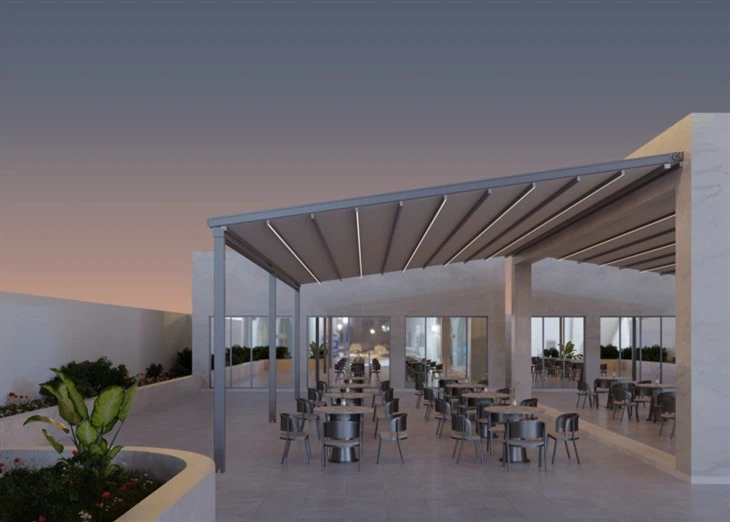

If you plan to create a cozy outdoor living space with a retractable roof, a steel or aluminum pergola would be a good choice. Their high weight - bearing capacity can support the weight of the retractable roof system. You can enjoy the flexibility of opening and closing the roof according to the weather conditions.
For a courtyard setting where you want to add some climbing plants and small decorative elements, a wood or vinyl pergola would be sufficient. They can support the weight of the plants and light decorations while adding a touch of natural beauty to your courtyard. Check out our Courtyard Pergola options for more inspiration.
If you have a small garden and want to add some hanging lights and a few potted plants, a pressure - treated pine or composite pergola can meet your needs. They offer a good balance between cost and functionality.
Conclusion
In conclusion, the weight - bearing capacity of different garden pergola materials varies significantly. Wood, metal, vinyl, and composite materials each have their own characteristics and weight - bearing capabilities. When choosing a pergola material, you need to consider your specific needs, budget, and the intended use of the pergola.
As a supplier of Garden Pergola Ideas, we are here to help you make the right choice. Whether you need a pergola for a small backyard or a large commercial courtyard, we can provide you with high - quality products and professional advice. If you are interested in purchasing a pergola or have any questions about our products, please feel free to contact us for a procurement discussion. We look forward to working with you to create the perfect outdoor space.
References
- Building Codes and Standards for Outdoor Structures
- Manufacturer's Specifications for Pergola Materials
- Industry Research on Pergola Durability and Weight - Bearing Capacity